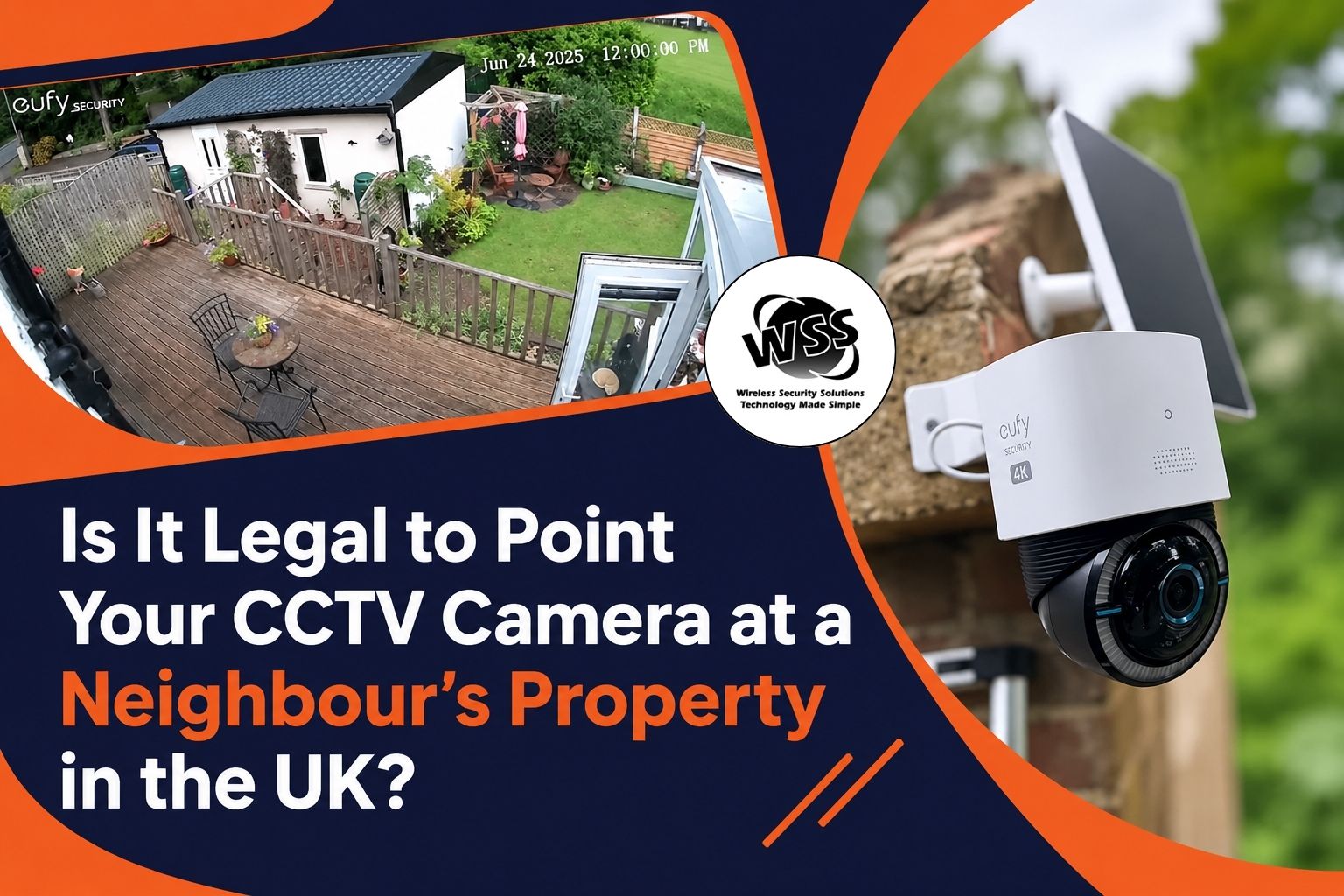
Summary: Homeowners can generally use CCTV that incidentally captures part of a neighbour’s property, but privacy and data protection rules may apply. Cameras should record only areas necessary for security. It is better to avoid neighbours’ windows and gardens if possible. Use privacy masking, minimise audio recording, secure footage, and do not keep recordings unnecessarily. Professional positioning can help with proper camera placement.
Installing CCTV cameras at home is essential to keep your property more secure. It can help you deter intruders and monitor your property. But what happens if your camera also captures part of your neighbour’s property? Is it legal? The answer is: It is not necessarily illegal, but there are some important rules to follow.
If your CCTV only records within your own private property, there is no problem. However, if it captures people or areas outside your property boundary, UK data protection law can apply. So, before you point a camera towards the boundary, let’s learn some important points.
Can You Point CCTV at Your Neighbour’s Property?
As mentioned earlier, there is no such rule that says that every CCTV camera pointing towards other property is illegal. The important thing you need to consider is what your camera actually captures and whether that recording is necessary.
For example, you install a security camera to monitor your front door and driveway. It can happen that the camera also captures a small section of your neighbour’s property. It does not mean that you have to remove the CCTV. So, try to position cameras in a way so that they capture only what is necessary and, if possible, avoid neighbouring properties and public areas.
So, before installing security cameras, think about:
- Why you are using CCTV.
- What area the camera records.
- Whether you are recording more than necessary.
- Who can access the recordings.
- How people are informed that recording is taking place.
When Can CCTV Become a Privacy Issue?
CCTV becomes more sensitive when it records areas where people expect privacy:
- Your Neighbour’s Garden
If a camera is pointed at a neighbour’s garden, it can be particularly intrusive. Your camera does not need to record that area for security purposes. You must change its angle or use a privacy masking feature.
- Windows and Private Areas
Never point a CCTV camera directly towards your neighbour’s windows. It can create a much greater privacy concern. During security installation, you should only focus on protecting your own property.
- Driveways and Shared Spaces
Driveways, paths and communal areas can be more complicated, particularly where several properties share access. If recording a shared area is necessary for security, minimise the amount of footage captured. You can also consider privacy settings where available.
- Public Pavements and Roads
A front-facing camera sometimes captures part of a pavement or road. Again, this does not automatically make the CCTV unlawful. However, because people outside your property may be recorded, data protection responsibilities can apply.
Do You Need Your Neighbour’s Permission Before Installing a Camera?
No! Generally, you do not need to take your neighbour’s permission because they may appear on your CCTV footage. But this does not give you the freedom to record anything you want.
Your security needs should be balanced against the privacy of other people. If your neighbour raises a reasonable concern, you must review the camera’s position. Sometimes a small adjustment can protect both properties.
What Can Your Neighbour Do If They Object?
If your neighbour believes your CCTV is recording too much of their property, first they will let you know their concern. You should explain why you installed the camera and, if possible, show them what it actually records. If the camera captures their property unnecessarily, you should reposition it or activate a privacy filter. If any dispute occurs and it cannot be resolved, the person being recorded can take legal action.
How to Position CCTV Without Invading Privacy
CCTV installation is not just about getting the widest possible view. It is about getting the right view. A home security company can ensure that the camera is properly positioned and that it can give you useful coverage. You can avoid unnecessary recording of other people’s property.
Here are some practical steps:
- Use privacy zones: Many modern cameras allow parts of the image to be blocked or masked.
- Limit the camera’s field of view: Point the camera towards your doors, windows, driveway or other areas you actually need to protect.
- Avoid unnecessary audio recording: Audio can be particularly intrusive, so consider whether you really need it.
- Secure your footage: Recordings should be protected and accessible when you need access.
- Don’t keep footage forever: You can delete footage regularly or automatically where appropriate.
Professional camera positioning can make a big difference here. Our expert team first properly assess of your property and identifies vulnerable areas. It can reduce unnecessary capturing of neighbouring homes and public spaces.
Final Thoughts!
So, is it legal to point your CCTV camera at a neighbour’s property? It is not as simple as saying yes or no. The best CCTV system is not the one that captures the most. It’s the one that protects your property while also respecting the privacy of everyone around you.
If you are installing a wireless CCTV system, contact us for professional advice, or schedule your appointment today.
FAQs
Q: Is it legal to point CCTV at my neighbour’s property?
It is not automatically illegal. But data protection and privacy responsibilities may apply if your CCTV records people or areas outside your property.
Q: Do I need my neighbour’s permission to install CCTV?
Generally, no. However, you should position the camera responsibly and avoid unnecessarily recording your neighbour’s property, windows, garden, or private spaces.
Q: What should I do if my neighbour objects to my CCTV?
Explain why the camera is needed and show what it records. If unnecessary areas are captured, reposition the camera or use privacy masking.
Q: How can I prevent CCTV from invading my neighbour’s privacy?
Use privacy zones, limit the camera’s field of view, avoid unnecessary audio recording, secure footage, and regularly delete recordings when appropriate.
Search
Recent Posts
September 10, 2026
September 04, 2026
August 28, 2026
Leave a Reply