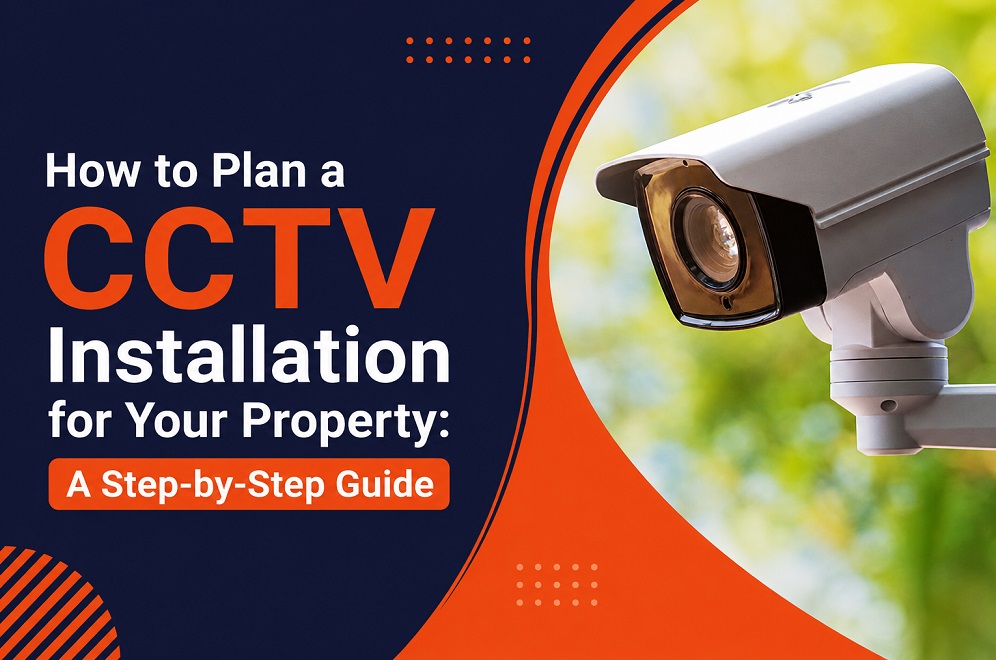
Summary: Planning a CCTV system starts with assessing security needs, choosing suitable cameras, positioning them carefully, planning footage storage, and ensuring professional installation. You can ensure reliable coverage, monitoring, and long-term property protection.
A CCTV system can help you deter unwanted activity, provide valuable footage, and give you greater peace of mind. But when it comes to CCTV installation, you might wonder where you should start. But proper planning is essential to ensure a successful installation. In this guide, we will explore steps to help you plan CCTV camera installation that works for your property. Let’s dive in!
A Step-By-Step Guide to CCTV Installation for Your Property
Step 1: Start With a Security Check
Before installing cameras, walk around your property and identify the areas that need the most attention. The areas that need the most attention are front and back doors, driveways, garages, gardens, and side entrances. If you are unsure, learn where you should install a CCTV camera around your home. You can determine the number of cameras and the best locations for them.
Step 2: Choose the Right Camera
Not every camera can do the same job. Indoor areas require different features from outdoor spaces. For outdoor surveillance, you need cameras that can offer clear image quality, night vision, motion detection, and suitable weather protection. For entrances, you need quality indoor cameras. You can also consider an eufy video doorbell C210 for an extra layer of security.
Step 3: Think About Positioning
Even the best camera cannot perform if it is positioned incorrectly. The right height and angle are important to capture everything clearly without unnecessary obstructions. Pay attention to lighting. Bright sunlight, shadows, and darkness can all affect image quality. So, position cameras correctly to maintain reliable performance.
Step 4: Plan How to Watch and Store Footage
A modern CCTV system is not just about recording video. So, you should think about how you can access your footage and receive security alerts. A system with mobile app access and remote monitoring can allow you to check your property when you are not at home. You should also consider whether footage will be stored.
Step 5. Make Installation Part of the Security Strategy
After selecting the cameras and locations, you need to think about installation. Poor installation can reduce the effectiveness of your entire system. A professional installer can assess your property, recommend suitable equipment, and position cameras for better coverage. After installation, they also test the cameras, motion alerts, and remote viewing. You can ensure everything works as expected.
With the right planning, a CCTV installation can be successful. You can get clear, reliable and practical protection.
FAQs
Q: Where should CCTV cameras be installed?
Begin by checking doors, driveways, garages, gardens, and side entrances to identify vulnerable areas and select camera locations for reliable coverage.
Q: What features should CCTV cameras have?
Outdoor cameras should provide clear images, night vision, motion detection, and weather protection, while indoor cameras should suit their environment.
Q: Why is professional CCTV installation important?
Professional installers can assess coverage, recommend suitable equipment, position cameras correctly, and test recording, motion alerts, and remote viewing after installation.
Search
Recent Posts
August 24, 2026
August 10, 2026
Leave a Reply